Product photography cost: what you pay per image in 2026
Real price ranges for white-background, hero and lifestyle shots, what pushes the bill up, when a pro shoot pays off, and how many photos your ads really need.
8 min read
The short answer on the cost of product photography: a simple white-background photo usually costs about $25 to $100 per image. Styled hero and lifestyle shots start at around $115 to $195 per image and go up from there. If you book by time, photographers charge about $500 to $3,000 a day. Those are the ranges in the studio price lists and pricing guides we checked in November 2026. Prices vary a lot by region, by product and by month, so treat them as a starting point, not a quote.
Product photography prices at a glance
- White-background photo (packshot): about $25 to $75 per image in most guides, up to $100 for trickier products. One studio we checked starts at $33, another charges $39 per photo plus a booking fee.
- Hero shot (the main styled image of a product): from about $115 per image.
- Lifestyle photo (the product in a scene, with props): from about $150 to $195 per image, often much more with models.
- Hourly rate: about $75 to $350 an hour.
- Day rate: about $500 to $3,000 a day, before studio hire, models or props.
So how much should product photography cost for a small store? Do the math on your catalog. Twenty products with three white-background angles each is 60 images. At $25 to $75 per image, that's $1,500 to $4,500, before any lifestyle shots.
What drives the cost of a product photo
Two quotes for "20 product photos" can be far apart. Here is what moves the price.
White background vs lifestyle
A white-background shot is fast: same light, same angle, product after product. A lifestyle photo needs a set, props, styling and time to get each frame right. That's why studios we checked list lifestyle shots at several times the price of a packshot.
Retouching
Basic cleanup is usually included. Background removal, color matching, dust and scratch fixes and compositing often are not. Studios we checked charge from about $9 per extra edit, and a transparent background can add $9 per photo. Bulk retouching services start under $1 per image, but only on a monthly plan and only for simple edits.
Models and hands
A hand holding the product shows scale and makes a photo feel real. It also costs extra: one studio adds $35 per photo for hand modeling, another lists hand models from $79 an hour and full-body models from $159 an hour. Hair and makeup for a model can add about $300. Clothing shot on a ghost mannequin adds about $30 per photo.
Props and styling
A stylist picks the props, the surfaces and the mood. Studios we checked charge about $149 an hour for styling, plus the cost of whatever gets bought for the set.
Usage rights
Who owns the files, and where you may use them, is part of the price. Some photographers limit usage by channel or by time: fine for your store, extra for paid ads or a billboard. Ask before you book. A cheaper quote with limited usage is not cheaper if you plan to run the photos as ads.
Per image vs day rate: which is cheaper
Product photography cost per image is easy to budget. It works well for a clear list, like 30 products with two white-background angles each. You know the total before the shoot.
A day rate pays for the photographer's time, however many photos come out of it. It makes sense for a big batch of simple shots or a styled shoot where the number of setups is hard to predict. For a long list of simple shots, a day or two at a day rate often costs less than paying per image, so get both quotes and compare. The catch: studio hire, models and props are rarely included, and an overrun means another day.
DIY product photography: what it really costs
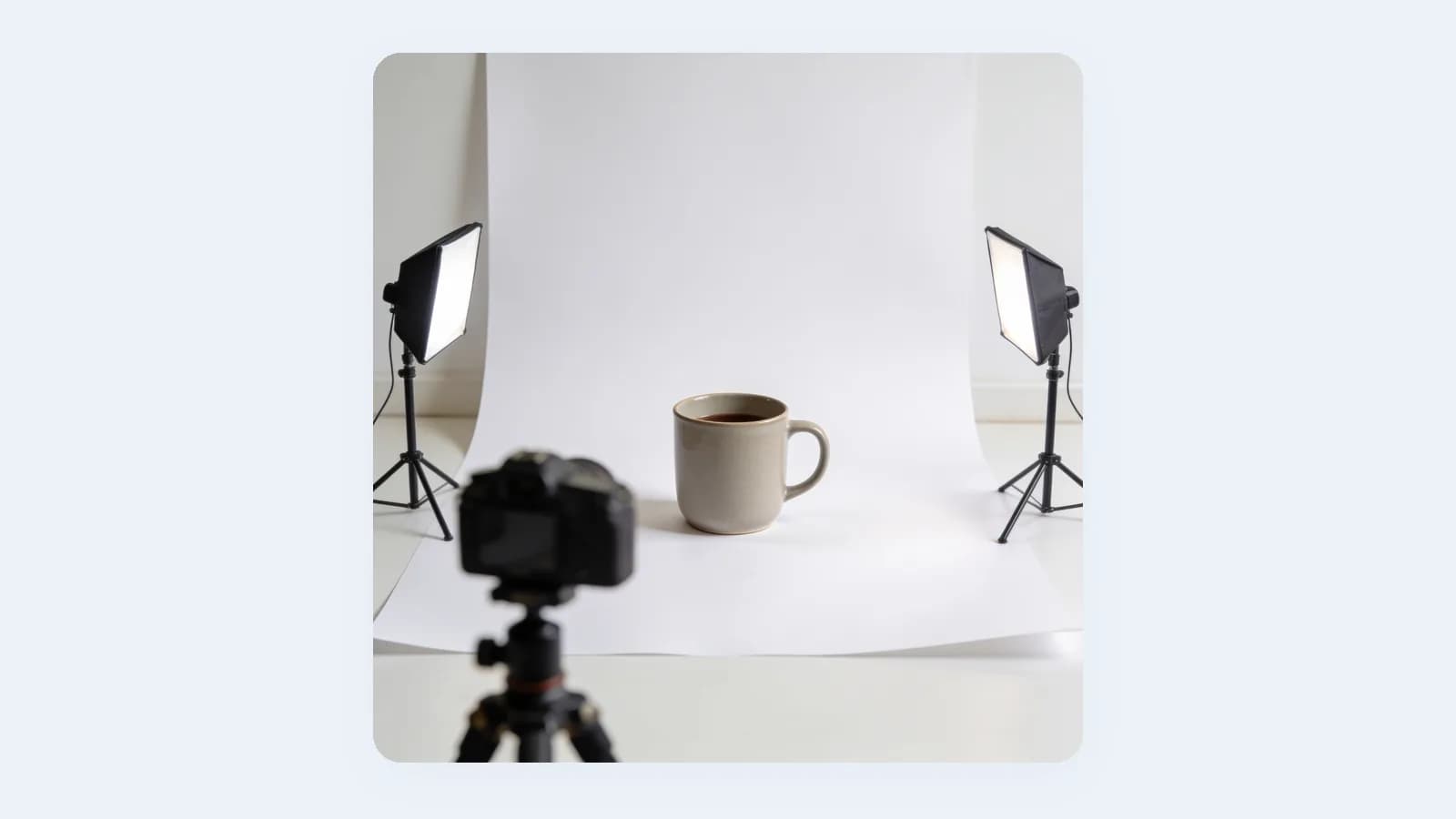
You can shoot good white-background photos yourself. A recent phone, a window or two cheap lights, a white sweep of paper or a light tent, and a tripod cover most small products. The money cost is low. The real cost is time:
- Learning. Your first shoot will take a whole afternoon and a few reshoots before the light looks even.
- Editing. Cropping, color fixes and a clean background often take longer than the shoot.
- Consistency. Ten products shot on three different days rarely match.
- Lifestyle is hard. Packshots are easy to learn. A styled scene with props, a model and the right mood is where DIY usually falls apart.
A fair rule: do the white-background shots yourself, and spend money only where skill shows, like the hero image or a lifestyle set.
When a pro shoot is worth it
- Products that are hard to shoot. Glass, chrome, jewelry and anything reflective. Light control takes gear and practice.
- Your main listing images. The first photo on your product page works for years. Paying once for a sharp, true-to-color shot is money well spent.
- Clothing on a person. Fit, fabric and drape need a real model and a real body.
- Details buyers inspect. Texture, stitching, size next to a hand.
AI product photos: what they can and can't do
AI product photography has changed the math for one job in particular: new scenes. You upload a clear photo of your product, and the AI builds a new background, light and setting around it. Done well, your real product keeps its color, shape and label.
- What it does well: lifestyle scenes, seasonal backdrops and many variations fast, for ads and posts that need new pictures every week.
- What it needs: one good photo. Sharp, well lit, the product fully in frame. A clean phone shot works. A blurry or cropped one gives a weak result.
- What it can't do: show a color, size or detail you never photographed, or prove how clothing fits a body. If the photo doesn't show it, the AI shouldn't invent it.
- Where to keep a real photo: your main listing image. Marketplaces have their own rules for it, so check them, and keep an honest shot of the product first.
Want to try it on your own product? See AI product photos.
How many product photos you need for ads
This is where the cost of product photography really adds up. A product page needs a handful of photos, once. Ads need fresh pictures all the time, because the same image shown to the same people stops getting clicks. TikTok's own guide for new sellers recommends 5 to 10 new creatives per week per product when you run ads.
Run the math at shoot prices. Even five new lifestyle images a week for one product, at $150 to $195 each, is $750 or more a week. Most small stores can't pay that, so ads run on the same three photos for months. A better split:
- Pay once for the base. Clean, true-to-color photos of each product, shot by you or a pro.
- Make ad variations from that base. New scenes, headlines and sizes, every week, without a new shoot.
- Test and keep the winners. Let the numbers pick the scene. Our guides to static ads and product ads cover what to test.
- Check what you can afford per sale. Creative costs and ad spend both come out of margin. A break-even ROAS calculator shows where the line is.
How Vendy helps: ad images from the photo you already have
Vendy is built for step 2. You give it one product photo or a link to your store, and it makes ready ad images around your real product:
- New scenes for your product. A new scene, new light and a headline around your product photo. Start with a prompt or take an idea Vendy suggests. Up to four versions in one run. See AI product photos.
- Proven ad layouts. Pick a layout that already works, and Vendy rebuilds it with your product, brand and words. See ad templates.
- Short product videos. The same photo becomes a 3 to 15 second commercial with close-ups, captions, music and your end card. See the AI commercial generator.
- Every size you run. Eight sizes, from a 9:16 story to a 16:9 banner, ready to download.
A clear phone shot is enough to start. Color, texture and label come out as you shot them, with no redrawn logos or invented details. You get full commercial rights to every image, including paid placements, and these tools are included in every plan. What Vendy doesn't replace: the true-to-life photos for your product page and the details buyers inspect up close. Shoot those once, then let Vendy make the weekly variations. Running a growing store? See how this works for scaling e-commerce.
Questions about product photography cost
How much does product photography cost per image?
About $25 to $100 for a simple white-background photo, and from about $115 to $195 for hero and lifestyle shots in the price lists we checked in November 2026. Models, styling and extra retouching cost more.
How much does a product photo shoot cost for a full day?
Pricing guides put day rates at about $500 to $3,000. Studio hire, models, props and heavy retouching are usually extra, so ask what the day rate includes.
Is it cheaper to pay per image or per day?
For a short list of simple shots, per image is usually cheaper and easier to budget. For a large batch, a day rate often works out cheaper per photo, as long as the shoot doesn't run over.
Can AI product photography replace a photographer?
Not fully. AI needs one good photo of your real product to start from, and it can't show details you never shot. It's best for new scenes and ad variations. Keep real photos for your main listing images.
How many product photos do I need?
For a product page, several angles plus a detail shot and a photo in use. For ads, far more: TikTok's guide for new sellers suggests 5 to 10 new creatives per week per product when you advertise.
Takeaways
- A white-background product photo costs about $25 to $100. Lifestyle and hero shots start around $115 to $195.
- Day rates run about $500 to $3,000, before models, props, studio hire and retouching.
- Shoot packshots yourself, and pay a pro for the hard products and the main listing images.
- Ads need new images every week. Make those variations from one good photo instead of booking a new shoot.
Keep reading
All articles Ad basics
Product ads: formats that sell and how to make them
What product ads are, which formats small sellers should run, what makes one work, and how to turn one product photo into a full set of ads.7 min read
 Ad basics
What is ad creative? Parts, types and how to test it
Ad creative is the part of an ad people actually see. Here is what it is made of, the main types, and how to build a set of creatives worth testing.8 min read
 Marketplaces
Facebook Marketplace selling tips: photos, price and fast replies
How to sell on Facebook Marketplace and sell faster: photos that get the tap, titles buyers search for, a price that moves, replies, safe meetups, shipping and boosting.8 min read